
Custom dog wheelchairs and pet mobility carts
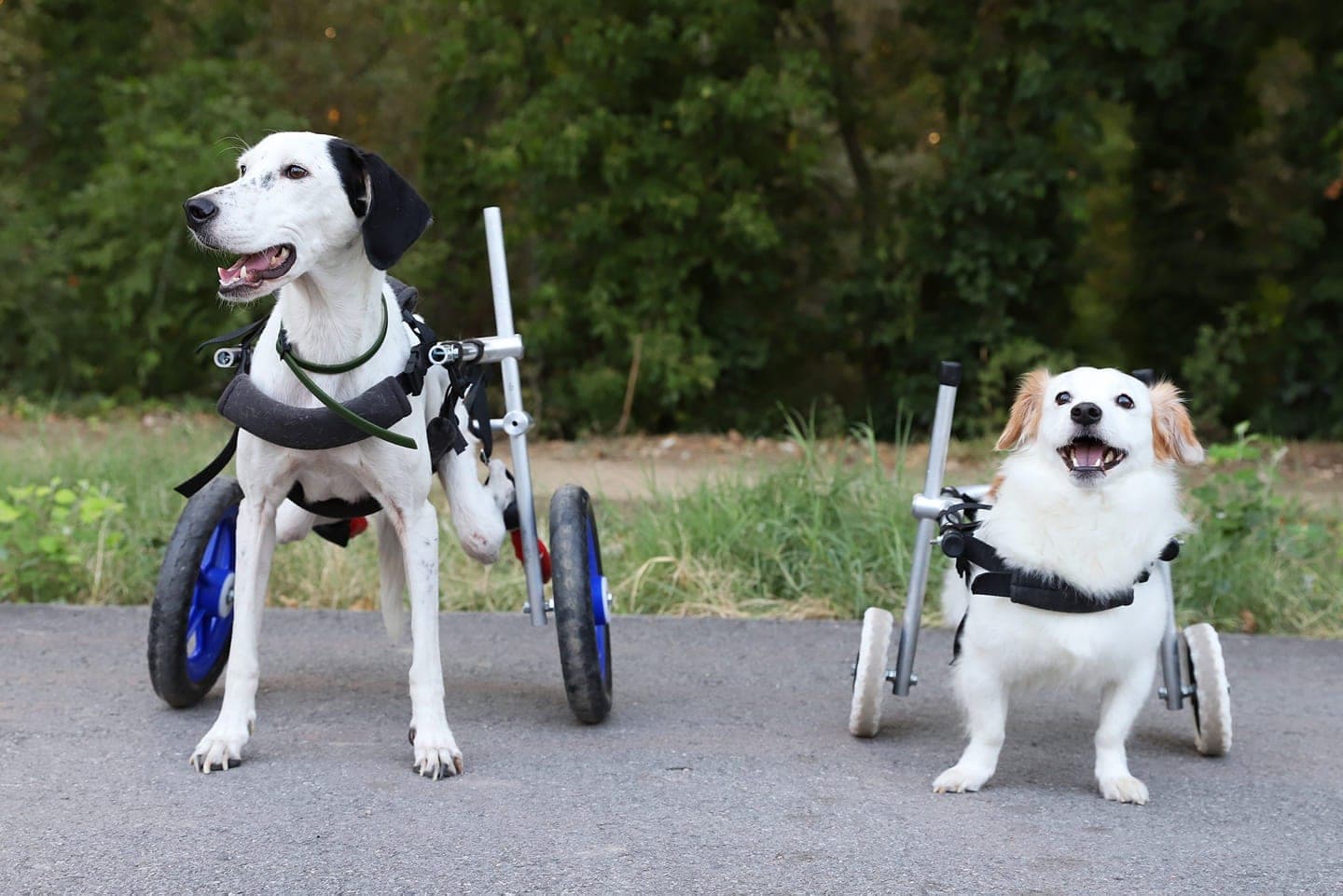
When more than one limb is affected, a prosthetic cannot carry the load — a custom wheelchair can, giving your dog or cat its movement back. Order your Plus2Feet cart through PIVOT, with assessment, sizing and fitting support included.
€190–€450
depending on size and build
2–3 weeks
from measurement to delivery
2–70kg
cats and dogs of every size
Which one does your animal need?
There is one question that decides it, and you can usually answer it yourself.
The rule
Count the affected limbs. One limb means a prosthetic. More than one means a wheelchair.
A prosthetic replaces a single limb, and the animal carries its own weight on the others. Once a second limb is involved there is not enough left to carry that load, so the weight has to be taken by a frame instead.
A prosthetic
One limb
A single limb amputated, malformed or unusable, with the other three sound. The prosthetic gives that one leg back and the animal does the rest.
Read about prostheticsA wheelchair
Two or more
Any case where more than one limb is affected — whether from amputation, paralysis, disc disease or nerve damage. The cart carries the weight so those limbs do not have to.
You are on the right page
Conditions a cart is built for
These are the situations that leave more than one limb affected, which is why they point to a cart rather than a prosthetic.
Hind-leg paralysis
Spinal injury or nerve damage that has left both back legs without function.
IVDD & disc disease
Dachshunds, French Bulldogs and other at-risk breeds recovering from or living with disc disease.
Degenerative myelopathy
Progressive weakness where a cart preserves mobility and muscle tone for as long as possible.
More than one limb affected
Any case involving two or more limbs, in any combination — once a second limb is involved a prosthetic cannot carry the load.
Severe hip dysplasia or arthritis
Older animals whose joints can no longer take their weight over a full walk.
Post-surgical recovery
Temporary support that keeps an animal moving safely while tissue heals.
How you get one
Tell us about your animal
Send us the diagnosis, a short description and any photos or video of your pet trying to move. We review every case ourselves and reply within 24 hours with an honest view of whether a cart will help — and which type.
One simple measurement
No complicated set of measurements and no clinic visit. We only need your animal's length — and we tell you exactly where to measure from and to. That single number, with your pet's weight, is enough to size the frame correctly.
Plus2Feet build it
Each cart is made to order in Greece — not pulled off a shelf in a generic size. Two to three weeks in the workshop, with the frame adjustable afterwards as your animal settles into it.
Delivery and first walks
The cart ships to you assembled. We walk you through the first sessions and stay available for adjustments as your animal builds confidence and strength.
What every cart includes
Our partner
Why we work with Plus2Feet
We build prosthetics. We do not build carts — and we would rather send you to people who do it properly than sell you something we made as an afterthought.
Plus2Feet have been making wheelchairs for dogs and cats in Greece for years. Every frame is made to order for the animal it belongs to, and they know the failure modes that matter: pressure points on a paralysed hind end, wheels that sink in grass, harnesses that chafe on a long walk.
Working with them means you get one assessment covering both routes. We tell you whether your animal needs a prosthetic or a cart, and you deal with one team either way.
Questions we get asked
Should my dog have a wheelchair or a prosthetic?
It comes down to how many limbs are affected. If it is one limb, the answer is a prosthetic — it replaces that leg and the animal carries its own weight on the other three. If more than one limb is affected, the answer is a wheelchair, because there is no longer enough sound limb to carry the load and the frame has to take the weight instead. If you are not sure how to count your animal's case, send it to us and we will tell you honestly — including if neither is appropriate.
How much does a dog wheelchair cost?
Carts range from €190–€450 depending on the size of the animal and whether it needs rear-wheel or full four-wheel support. Very small cats and small dogs sit at the lower end; large breeds needing full support sit at the top. We confirm the exact figure before anything is built.
How do you measure my pet?
It is deliberately simple. We do not ask you to take a set of complicated measurements — we only need one lengthwise measurement of your animal, and we tell you exactly where to measure from and to. Send that back with your pet's weight and a couple of photos, and the cart is sized from those.
Can cats use a wheelchair?
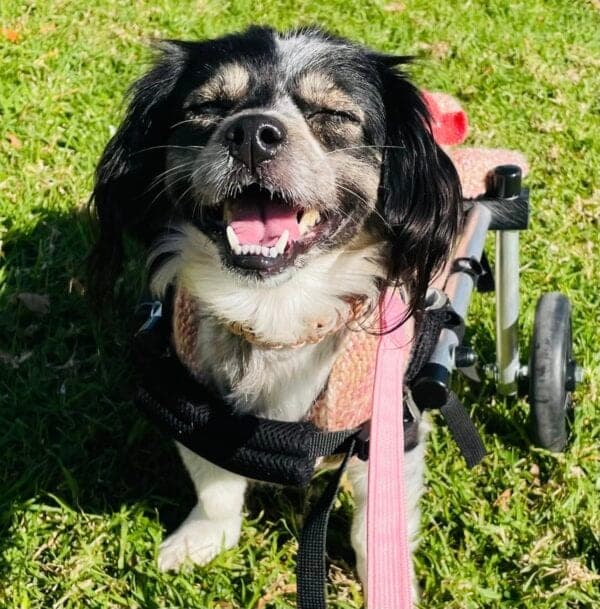
Yes. Cats adapt to carts well, often faster than dogs. The frames are built lighter and narrower for feline anatomy, from around 2kg upwards.
How long does it take?
Roughly two to three weeks from the point we have your measurement confirmed, plus shipping time to your country.
Will my pet actually use it?
Most animals take to a cart within a few short sessions, particularly if they still have some hind-limb awareness. We give you an introduction plan to build it up gradually rather than expecting a full walk on day one.
Not sure whether a cart is right for your animal?
Send us the case. We will tell you honestly whether a wheelchair, a prosthetic, or neither is the right answer — at no cost and with no obligation.
Start your free assessmentTakes 60 seconds · Reply within 24 hours